Overview
Commercial lenders automate small business credit decisioning by embedding verification APIs and standardized credit policy rules directly into loan origination systems. These systems programmatically verify business identity, analyze cash flow, and score credit risk to make consistent lending decisions at scale.
Lenders automate credit decisions without increasing defaults by establishing strict verification gates and reserving automated approvals for low-risk, verified applicants. Automated rules route borderline files, unexplained cash-flow patterns, and unverified signers to human underwriters before releasing funds.
In brief
- Lenders automate credit decisions by encoding policy rules into digital origination workflows.
- Automated verification gates confirm business identity and standing before credit scorecards run.
- Bank transaction analysis calculates cash flow metrics and identifies recurring debt payments automatically.
- Underwriting systems reserve automated approvals for verified businesses and route exceptions to human analysts.
Test credit quality before expanding automation
Start with the lending decision you want software to make. Record the required inputs, policy thresholds, and conditions that need review. This makes it possible to test whether the automated outcome follows the intended policy.
A credit score alone may leave identity, recent borrowing, or cash-flow questions unanswered. Adding a source only helps if it covers the borrower and the relevant period. Treat missing information as a separate state, not evidence that the applicant passed.
Compare automated and existing reviews before expanding use. Track approval rates, manual overrides, and repayment outcomes for comparable borrowers and periods. A faster decision is an operational improvement, not proof of better credit quality.
Four checks to build into the decision process
An automated decision needs evidence about the borrower and its finances, plus rules for translating that evidence into an outcome. Build checks for each part of the decision, with the order and thresholds set for your lending product:
- Business identity: Compare registration details and the submitted name and tax ID. Route unresolved mismatches or unavailable sources for correction or review. A failed lookup is not, by itself, a reason to conclude the business is fraudulent.
- Existing obligations: Review public records and the borrower’s debt information. Uniform Commercial Code (UCC) financing statements give notice of existing security interests in business assets. Evaluate whether existing filings conflict with your required lien position or require a subordination agreement before extending credit.
- Cash flow: With borrower permission, examine available bank and accounting records for receipts, expenses, and existing payments. Identify loan proceeds and transfers separately from revenue. Confirm unexplained recurring payments with the borrower.
- Scoring and terms: Apply the lender’s approved rules to set an outcome and any proposed terms. Retain the inputs and rule version. Define when missing or conflicting evidence requires review instead of an automated approval or decline.
Setting guardrails: when to route to manual review
Some applications need manual review when the available evidence leaves a material question unresolved. Define what triggers that review and the specific question the underwriter must answer:
- Recent registration changes: Ask about officer, address, or status changes that conflict with the application. Set any lookback period according to the lender’s policy and evidence, not a universal ninety-day threshold.
- Potentially conflicting claims: A blanket lien may cover broad categories of assets, including money customers owe the business. Review whether it overlaps the proposed collateral and whether a release or agreement about repayment order is needed.
- Cash-flow concerns: Investigate repeated returned payments, overdrafts, or unexplained deposit spikes. Check whether the pattern reflects recurring shortfalls, seasonal activity, or a one-time event before deciding how it affects repayment.
Set limits for the rollout and define who can pause automated approvals if data quality or repayment performance worsens. Review samples of automatically decided files as well as exceptions so errors outside the review queue are not missed.
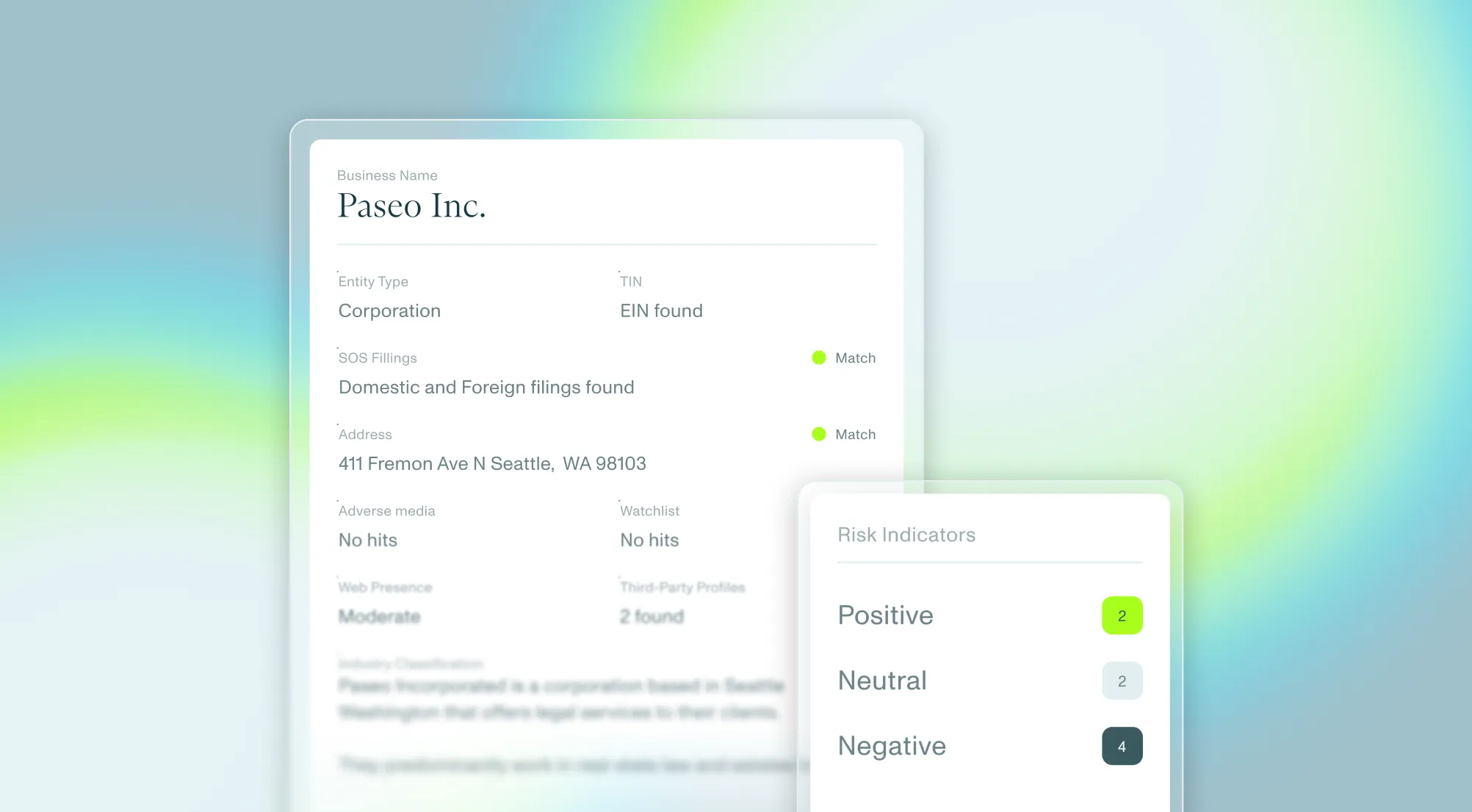
Middesk supplies business verifies business identity and standing programmatically, while its underwriting intelligence surfaces liens, bankruptcies, judgments, and UCC filings. Lenders combine these verified public records with cash-flow analysis and internal credit policies. Automated data verification accelerates the file, but policy rules govern the final credit decision.
Frequently asked questions
What is straight-through processing (STP) in commercial lending?
Straight-through processing (STP) means a defined process finishes without manual intervention. In lending, specify whether you mean verification, a credit decision, or the full application-to-funding process. Also distinguish automated approvals from automated declines when reporting the rate.
How do automated decision engines detect overleveraged borrowers?
Bank transactions may reveal recurring payments not listed on the application. Confirm what those payments are and compare all obligations with cash available for repayment. A payment pattern alone does not prove a merchant cash advance, which is funding repaid from future business receipts, or establish the full balance owed.
What auto-approval rate should a commercial lender target?
Set a target for your product and borrower population, not a universal percentage. Define the denominator and whether the rate includes declines or only approvals. Evaluate speed and review workload alongside repayment outcomes and decision quality before raising the target.
What should happen when a required data source is unavailable?
Keep unavailable data separate from a passed check. Retry, request other evidence, or route the application for review according to policy. Record the missing input so the lender can distinguish a source failure from a borrower risk finding.

New to Middesk?
Talk to our team to see what business identity intelligence looks like inside your workflow.
Get a demo