Overview
Preventing business identity fraud during commercial account opening can include supplementing document review with automated verification across state registries, federal tax records, and postal databases. Criminals regularly defeat manual onboarding by submitting forged formation certificates alongside mismatched tax IDs, virtual office addresses, or unauthorized signers.
Financial institutions protect their onboarding funnels by verifying corporate charter standing directly with state registries, matching employer identification numbers with IRS records, confirming beneficial owners, and screening device signals across applications. Institutions can configure rules to approve applications that meet their criteria and route others for analyst review.
In brief
- Manual document reviews fail to catch business identity fraud because digital editing tools allow applicants to forge formation certificates and tax letters easily.
- Core onboarding controls verify state corporate registration status, IRS tax identification numbers, and postal delivery characteristics against primary records.
- Cross-application velocity checks flag potential coordination by measuring how often the same device, IP network, or contact detail appears across submissions within a set period.
- Automated portfolio monitoring alerts risk teams to post-onboarding changes in registration status or listed officers.
The shift from static document reviews to primary data verification
Traditional commercial account opening workflows depended heavily on manual document intake. Compliance teams routinely asked applicants to submit scanned PDF copies of state formation certificates, IRS CP 575 EIN confirmation letters, and utility bills. In an environment with accessible digital editing software and synthetic corporate filings, unverified document uploads offer little protection against organized commercial fraud rings.
Under the federal bank Customer Identification Program rule, banks must implement risk-based procedures to verify customer identity to the extent reasonable and practicable. Effective onboarding defenses verify that the applicant is an active corporate entity, confirm that individuals opening the account possess verified legal authority to bind the enterprise, and identify discrepancies in physical operating footprints.
Core verification controls for commercial onboarding
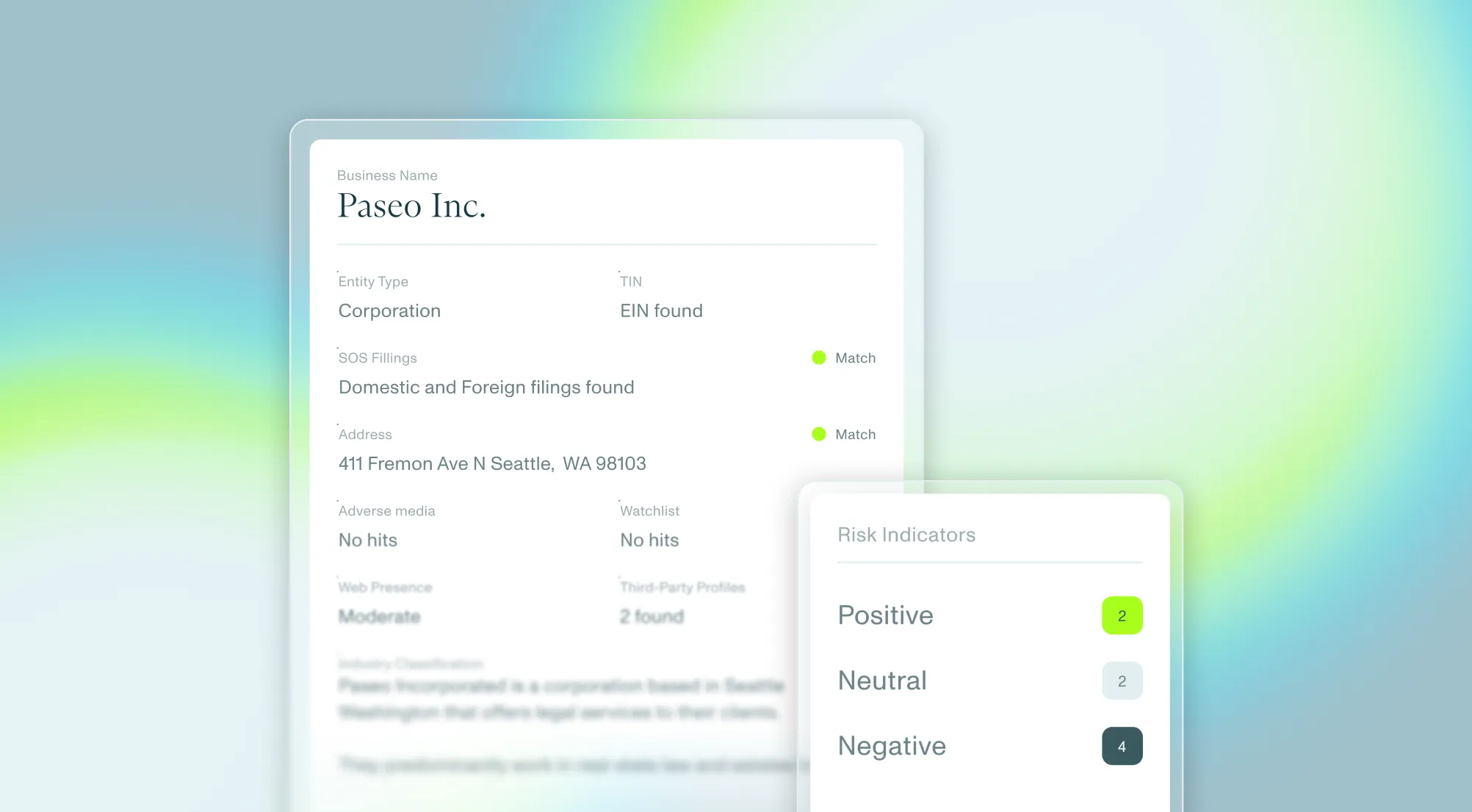
When applicants submit corporate documentation through automated onboarding funnels, underwriters must verify information across independent government and postal databases. Institutions reduce commercial onboarding risk by establishing four automated verification controls at intake:
State corporate charter verification: Querying state Secretary of State corporate databases confirms active legal standing, entity structure, formation date, and historical filings. Reviewing filing histories surfaces sudden, recent alterations in corporate officers or registered agents that often signal corporate identity takeover.
Federal tax identifier matching: Eligible payers and their authorized agents can use IRS TIN Matching for information reporting to check whether a submitted payee name and TIN match IRS records.
Postal delivery point classification: Assessing physical operating addresses using the USPS Delivery Point Validation (DPV) system confirms address deliverability and identifies Commercial Mail Receiving Agency (CMRA) indicators and private mailboxes.
Beneficial ownership and signer authorization: Where the federal beneficial ownership rule applies, a covered institution identifies and verifies the identity of each individual who owns 25% or more of the entity, directly or indirectly, and one individual with significant responsibility to control, manage, or direct it.
Cross-application velocity and ongoing lifecycle monitoring
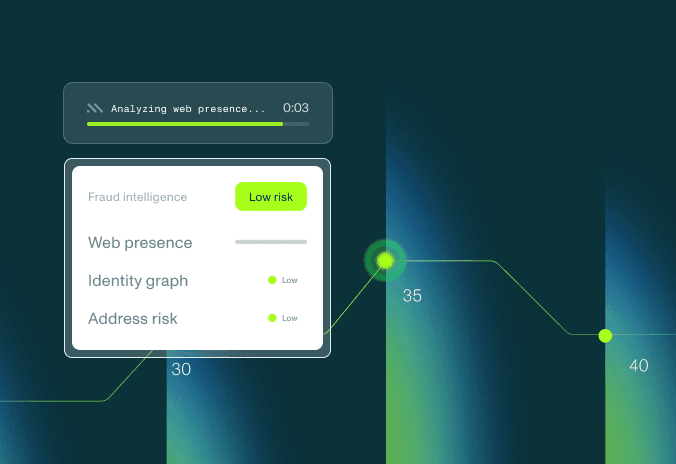
Commercial fraud syndicates frequently submit coordinated waves of applications across multiple institutions to test risk thresholds. By analyzing technical application attributes, such as device identifiers, IP subnets, applicant contact details, and banking disbursement coordinates, risk teams can uncover shared technical and operational networks that single-application reviews miss.
While legitimate remote companies often share registered agents or virtual office addresses, clusters of seemingly unrelated businesses that share identical hardware tokens or phone numbers indicate coordinated risk. Once onboarded, automated lifecycle monitoring tracks ongoing Secretary of State charter status, tax standings, and officer updates to catch corporate changes that emerge after account opening.
Middesk provides an automated business verification platform that strengthens commercial onboarding defenses. Connecting directly to official Secretary of State registries, IRS tax records, and postal databases, Middesk validates entity legitimacy, screens beneficial owners, and monitors status changes to help institutions onboard commercial customers safely.
Frequently asked questions
Why do digital PDF uploads fail to prevent business identity fraud?
Digital editing software makes it simple for bad actors to alter formation certificates, utility bills, and IRS confirmation letters. Static document reviews alone may not detect synthetic entity filings or verify whether a corporate charter remains in good standing with state authorities.
What data attributes expose coordinated fraud rings across multiple applications?
Cross-application analysis flags coordinated fraud clusters by tracking shared hardware tokens, IP subnets, applicant phone numbers, and common bank disbursement coordinates across seemingly unrelated business applications.
How does automated lifecycle monitoring protect portfolios after account approval?
Commercial risk changes over time as entities experience administrative dissolution, charter revocations, or executive management turnover. Automated monitoring continuously tracks Secretary of State filing updates and tax standing to catch post-onboarding risks.
How do institutions balance straight-through onboarding with fraud prevention?
Institutions use modular verification pipelines that evaluate digital device signals and primary corporate registries automatically. Applications that meet the institution’s criteria can be approved automatically; others can be routed to analysts for review.

New to Middesk?
Talk to our team to see what business identity intelligence looks like inside your workflow.
Get a demo