Overview
Commercial lenders reduce manual underwriting review times by connecting origination systems directly to business verification APIs, open banking feeds, and automated credit rule engines. These tools eliminate repetitive document collection and manual portal searches, accelerating routine loan decisions.
Lenders reduce manual review to shorten origination turnaround times, reduce acquisition costs, and expand loan volume without adding operations staff. Automating upfront entity and financial checks allows credit teams to reserve human analyst reviews for complex exceptions and high-risk applicants.
In brief
- Lenders cut manual review by replacing paper document gathering with automated verification data feeds.
- Direct open-banking connections calculate cash flow metrics and debt obligations in real time.
- Decisioning waterfalls approve clean applications automatically while routing exceptions to underwriters.
- Automating routine checks can shorten the time to a credit decision and free underwriters to focus on exceptions.
The operational bottlenecks of manual underwriting
Commercial credit underwriting has traditionally been an expensive, labor-intensive process. Analysts spend hours collecting bank statements, reviewing tax forms, searching state corporate registries, and checking county court records.
This manual friction creates three major operational challenges:
High acquisition expenses: Manual review requires large operations and underwriting teams, making small-dollar commercial loans expensive to originate and service.
Slow turnaround times and borrower drop-off: Small business owners demand rapid financing. When loan decisions take days or weeks, qualified applicants abandon applications to seek faster digital lenders.
Inconsistent credit decisions: Manual reviews introduce subjective variability. Two analysts reviewing the same business profile often reach different conclusions based on their individual risk tolerance.
Three core automations for scalable commercial decisioning
Repeated lookups, document handling, and routine routing are distinct sources of manual work. Target those tasks with automation so underwriters can spend more time on applications that need judgment:
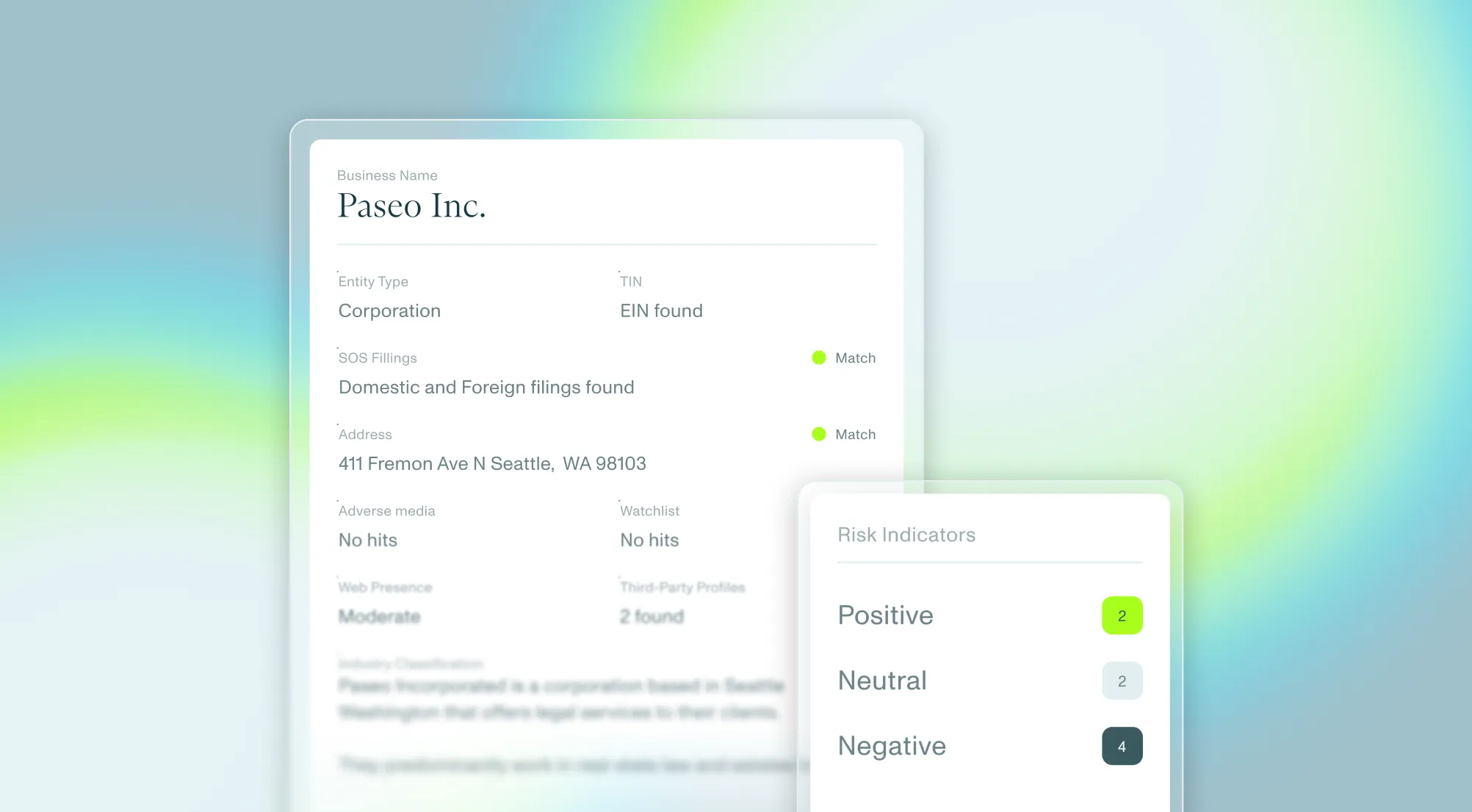
1. Automate upfront entity and compliance triage: Lenders eliminate manual registry lookups by integrating verification APIs that confirm active corporate standing, match IRS tax records, and screen watchlists in real time.
2. Replace document collection with structured data feeds: Lenders eliminate manual PDF statement reviews by connecting directly to business bank accounts via open banking APIs, automatically calculating revenue and average balances.
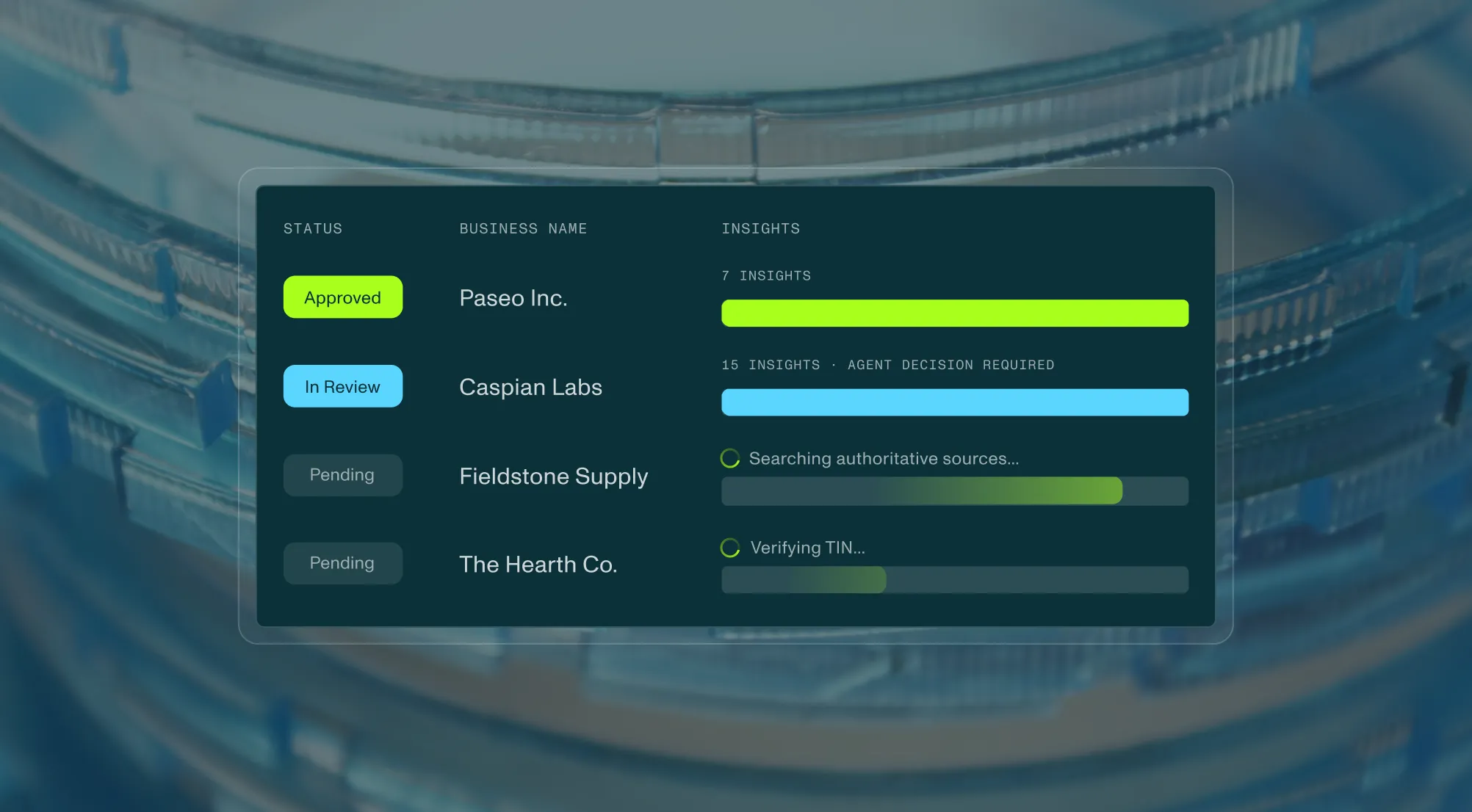
3. Establish tiered approval waterfalls: Lenders segment incoming applications into three automated review tracks: straight-through approvals for applicants meeting strict entity age and cash flow criteria, automated declines for applicants with active tax liens or recent bankruptcies, and targeted manual review for borderline files.
Reserving human underwriting for flagged exceptions allows lenders to maximize origination efficiency while maintaining disciplined credit standards.
Measuring operational return on investment across the credit lifecycle
Faster decisions alone do not show whether automation has reduced the work needed to fund a loan. Measure time, manual involvement, cost, and the quality of decision records to see where the process has improved:
Turnaround time (TAT): Track time from application submission to credit decision. Measure time to funding separately so you can see whether faster decisions also help borrowers get funds sooner.
Straight-through processing (STP) rate: For an application-to-funding workflow, measure the share of submitted applications that reach funding without manual intervention. Track automated declines separately.
Underwriting cost per funded loan: Reducing the labor hours required to decision each file, lowering origination expenses across small-dollar portfolios.
Auditability and consistency: Replacing informal analyst notes with immutable, API-generated decision logs that document exact verification criteria under fair lending rules.
Middesk provides the operational foundation for lenders seeking to eliminate manual underwriting reviews. By automating business verification and public record searches, Middesk helps lenders scale origination and deliver instant credit decisions.
Frequently asked questions
What is the average time to underwrite a small business loan manually?
Timing varies with the complexity of the loan and how quickly the lender gets the information it needs. In the FDIC’s 2024 Small Business Lending Survey report, three in four banks reported approving their typical small business loan within 10 business days. That figure measures time to approval, not time spent on manual review or time to funding.
What triggers manual review in commercial lending?
The most common drivers of manual review are verifying complex beneficial ownership structures, resolving address discrepancies, reviewing unindexed public liens, and reconciling mismatched tax identification numbers.
Does automating underwriting increase loan default rates?
Automating underwriting does not, by itself, increase or reduce loan defaults. Before expanding automation, compare delinquency and default rates for comparable groups of loans with the same amount of time since funding.

New to Middesk?
Talk to our team to see what business identity intelligence looks like inside your workflow.
Get a demo