Overview
Alternative data providers supply commercial lenders with non-bureau records, including real-time bank transactions, accounting software data, and state business registrations. Lenders use these sources to evaluate small business creditworthiness when traditional credit bureau files are thin or outdated.
Lenders integrate alternative data providers because small businesses frequently lack extensive credit bureau reporting. Direct connections to operating accounts and corporate registries reveal current cash flow, existing debt obligations, and legal operating status, allowing underwriters to assess credit capacity with primary evidence.
In brief
- Lenders use alternative data providers to inspect operating cash flow, corporate registration, and public filings.
- Direct open-banking feeds provide transaction histories to evaluate daily cash available for loan payments.
- Corporate registries and public records establish active legal status and uncover existing creditor claims.
- Automated APIs allow lenders to underwrite thin-file small businesses while maintaining disciplined credit standards.
What alternative data adds to a credit review
A borrower with little reported credit history may still have bank transactions, sales records, and financial statements that support an assessment. Use those records to examine repayment capacity rather than inferring it from the depth of a bureau file.
Sources answer different questions: registration data concerns the legal entity, bank and accounting data concern finances, and public filings may identify other claims. None provides a complete view of the borrower on its own.
Define the missing information before buying from another source. Test whether the new source adds useful evidence and whether reviewers can explain how it affected the decision.
Key categories of alternative data in SMB underwriting
The right provider depends on the information missing from the credit review, such as recent transactions, accounting records, or business identity evidence. Compare these categories by the question each one answers, then test coverage on the businesses you lend to:
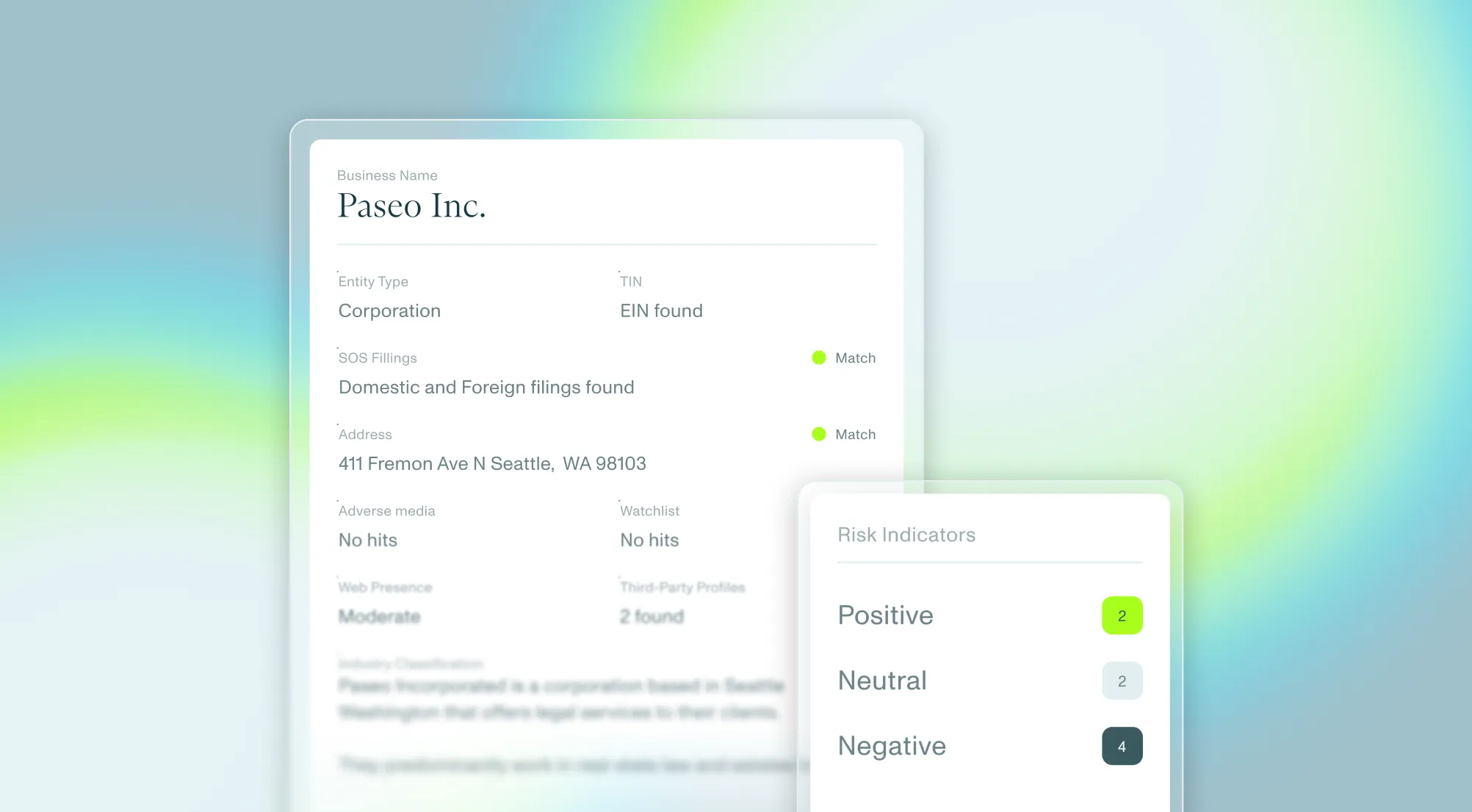
- Business identity: Middesk provides registration, name-and-tax-ID, and address checks. These support identity review rather than establish repayment ability or the signer’s authority.
- Bank data: With borrower permission, account connections can provide transaction history and balances. Review the available period and account coverage, and ask how deposits and recurring payments are categorized.
- Accounting data: Connections to bookkeeping systems can supply income statements, balance sheets, and reports of unpaid customer invoices. Check whether the books are current and how differences from bank records are handled.
- Payment data: Processor records can show sales, refunds, and disputed payments for covered channels. Confirm settlement timing and omitted channels before treating the figures as total revenue.
- Public records: Middesk provides tax lien, litigation, bankruptcy, and Uniform Commercial Code (UCC) lien searches, along with UCC filing documents and extracted collateral details. These records help lenders identify existing claims on assets and legal or financial issues that may affect a lending decision.
Select providers for coverage, reliability, and review-ability
A useful data source must cover your borrowers and return records your team can interpret, including when a request is incomplete or delayed. Test providers against these four criteria before relying on their results:
- Source and update history: Ask where the data comes from and when it was last updated. Direct connections and resold records both need coverage and freshness checks.
- Integration behavior: An application programming interface (API) lets systems exchange data. Test delayed, incomplete, and failed responses as well as successful ones. Define which results need a reviewer rather than requiring every application to finish in seconds.
- Decision explanations: Retain the data and rules supporting each outcome. Regulation B sets notification procedures for adverse credit decisions, including business-credit variations. When a statement of reasons is required, it must identify specific principal reasons.
- Borrower coverage: Test providers across the business structures, locations, account types, and operating histories in your portfolio. A successful result for one established company does not establish coverage for a new or differently structured business.
Middesk’s business verification and public-record searches support the identity and claims portions of underwriting. Pair those results with financial analysis rather than treating them as a complete credit assessment.
Frequently asked questions
What qualifies as alternative data in small business lending?
In this context, it means information outside traditional credit bureau reports. Examples include bank transactions, accounting records, state registration filings, tax return information, and payment-processor records. Each source has its own coverage and limitations.
Does using alternative data comply with commercial lending regulations?
Using alternative data does not itself establish compliance. Review the source, permissions, intended use, and lending rules with the appropriate compliance team. Regulation B still governs applicable adverse-action notifications, with procedures that vary for certain business credit.
How does alternative data improve SMB loan approval rates?
Additional records can help lenders assess applicants with limited reported credit history. Any effect on approvals or losses depends on the data, lending policy, and borrower population. Test that effect rather than promising that an additional feed will improve it.

New to Middesk?
Talk to our team to see what business identity intelligence looks like inside your workflow.
Get a demo