
Introducing Middesk Agents
For the past six years, Middesk has delivered the signals, context, and insights that power confident decisions about the businesses you work with across onboarding, compliance, fraud prevention, and underwriting.
We built the most reliable foundation for business identity. And with that foundation, we got very good at surfacing the right signals.
But surfacing signals creates work. Every flag needs investigation. Every potential match needs review. Every discrepancy needs resolution. The better we got at finding issues, the more work we created for the compliance and operations teams relying on us.
That changes today.
From surfacing to resolving
As business decisioning evolves, we're evolving how Middesk intelligence reaches you and what it can do. The business identity platform of the future isn't just data and insights waiting for interpretation. It's infrastructure that investigates on your behalf, delivers decisions instead of alerts, and integrates seamlessly into how you already work.
Not alerts - answers.
Agents at Middesk
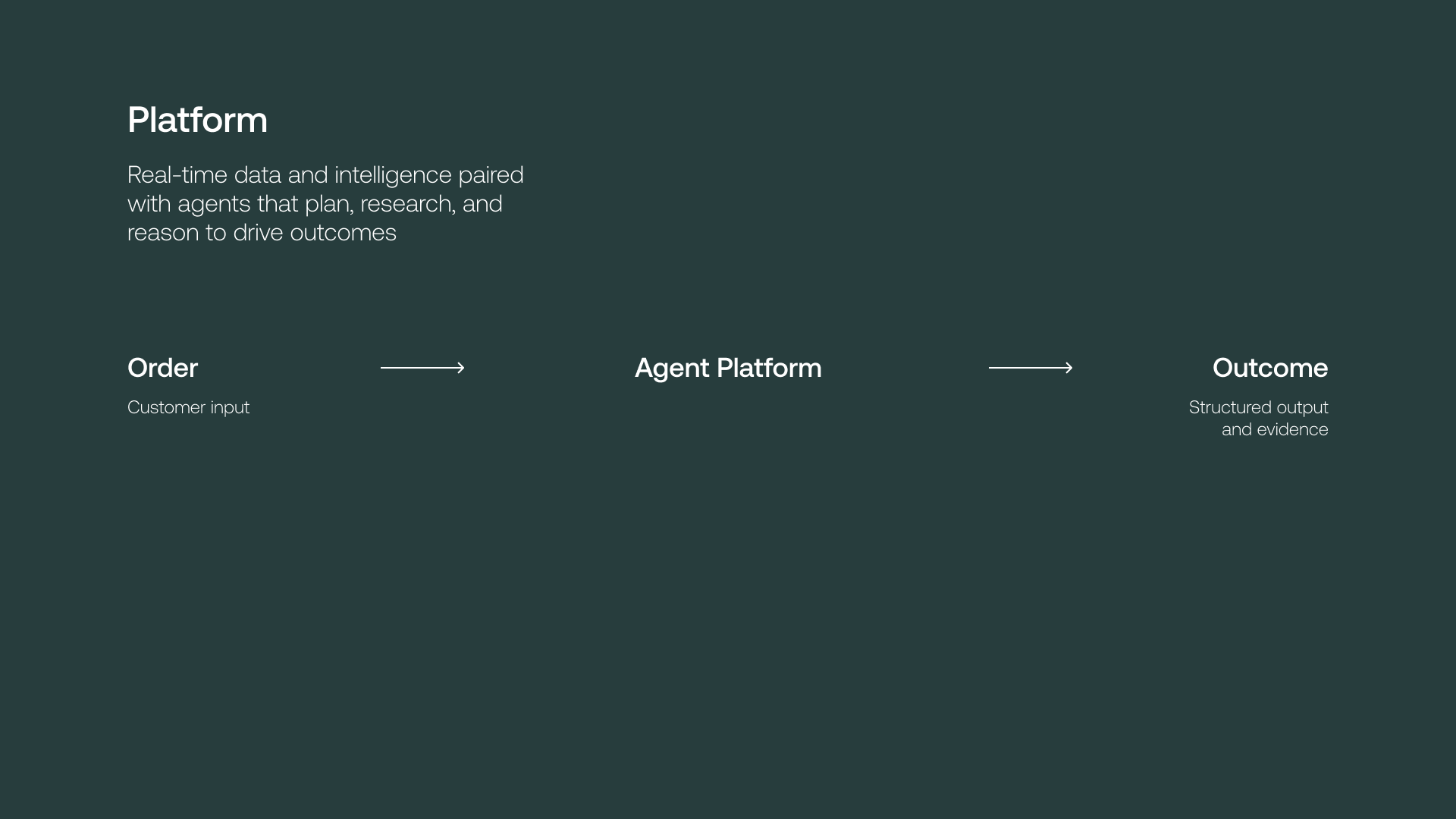
At Middesk, agents are infrastructure that acquires data, synthesizes signals, reasons across complexity, and applies judgment. They don't just retrieve information - they do the work.
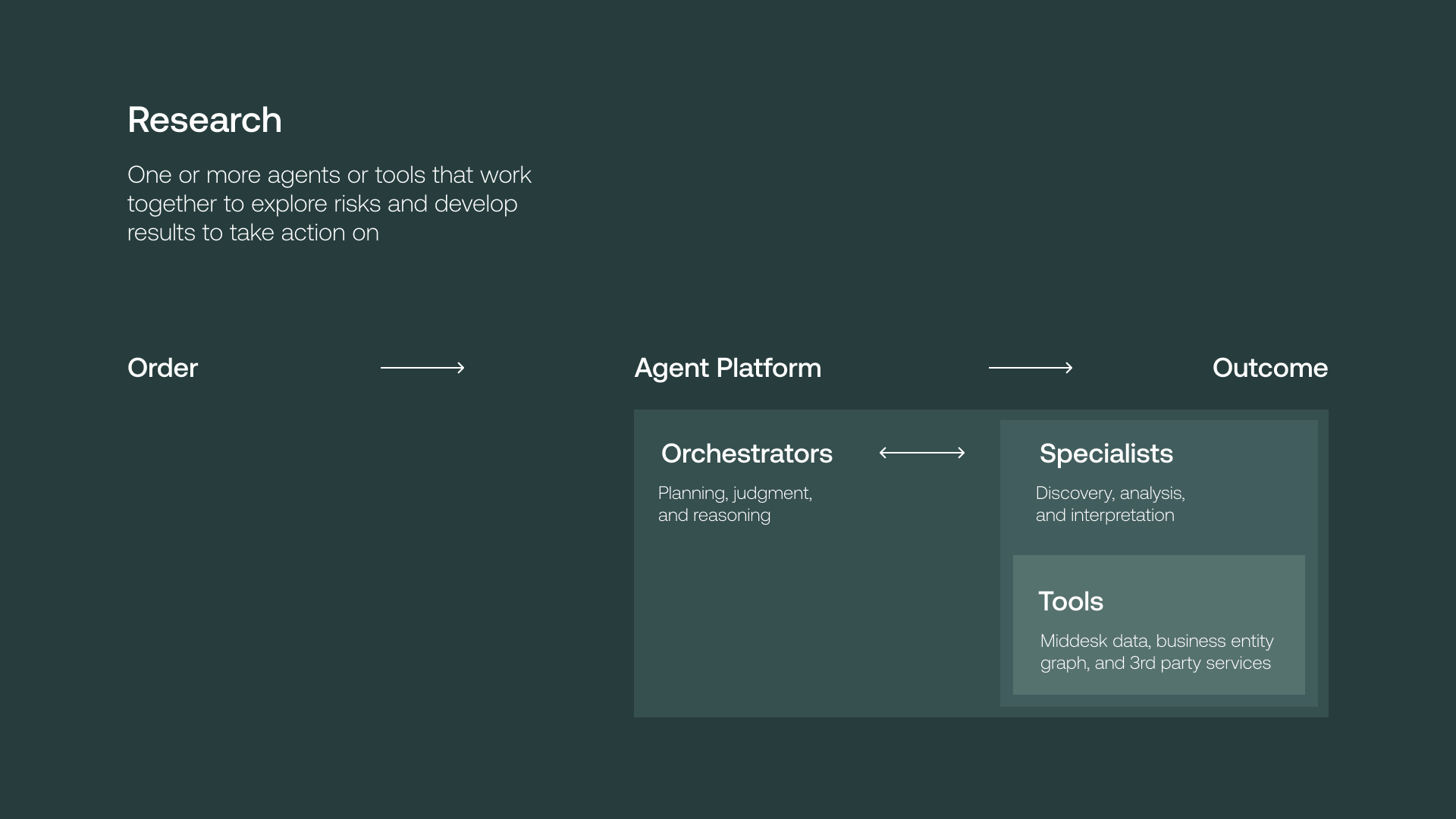
Agents operate in two layers:
Orchestration Agents (Orchestrators) understand what you're trying to accomplish, determine which capabilities are needed, and manage the work from start to finish. They set the goal, direct the specialists, and synthesize results into a complete answer.
Specialist Agents (Specialists) handle specific judgment tasks - they verify a relationship, resolve a screening match, interpret a finding, or extract data from a document. They are purpose-built for precision.
Orchestrators direct specialists. Specialists deliver precise answers. Together they produce decisions.
Three ways agents change how Middesk works
Agents transform how business identity intelligence operates across three areas:
Data acquisition beyond cached sources. When information isn't immediately available, agents explore and develop what's needed at the time of the order - researching, retrieving, and validating in real-time. Not static lookups, but rather, live investigation.
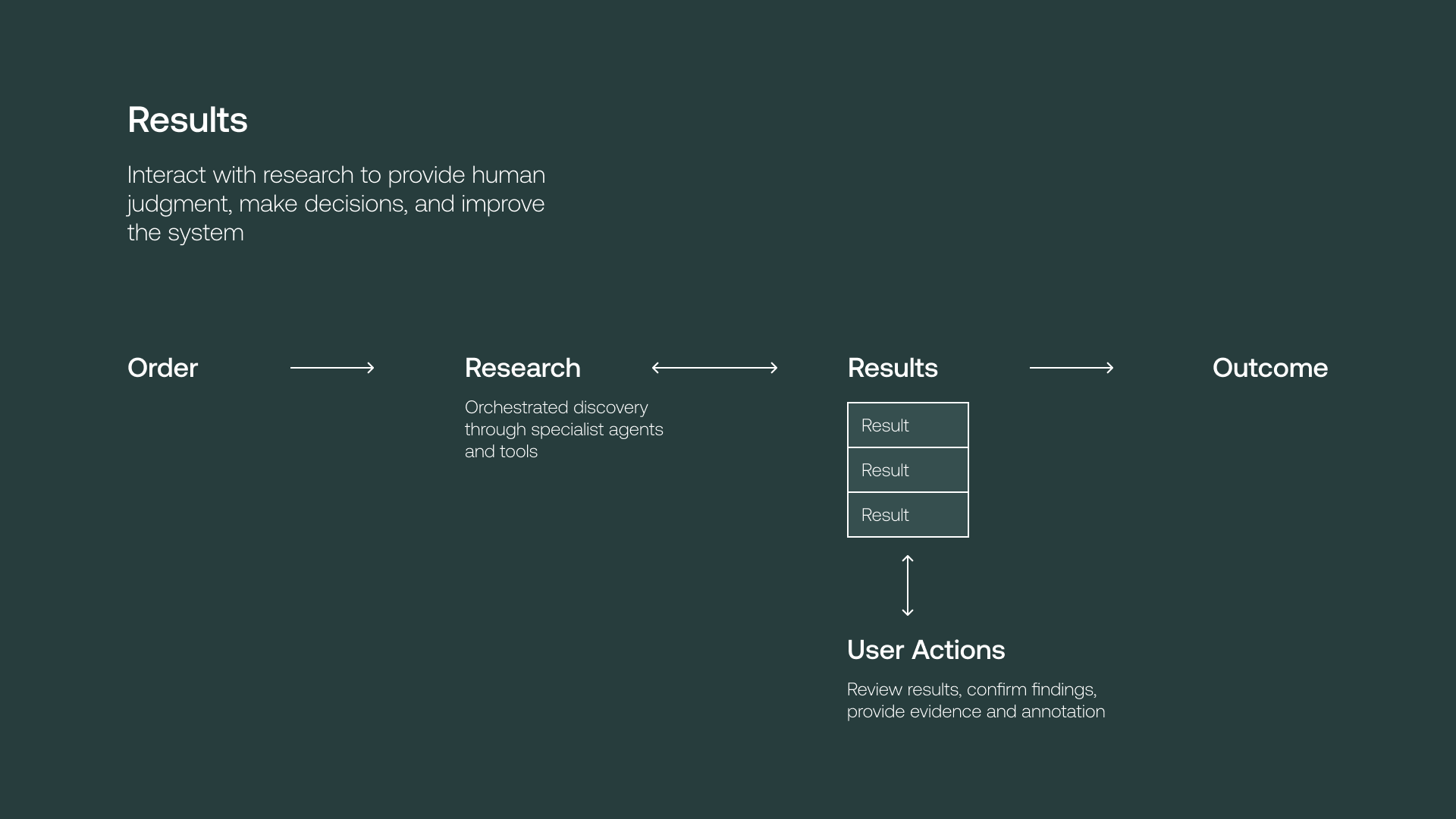
Intelligence and reasoning capabilities. Agents don't just flag issues for your review. They acquire the relevant data, synthesize signals across sources, reason about what they mean in context, and apply judgment to deliver a complete answer with evidence. When screening returns a potential match, agents determine whether it's true, assess materiality, and deliver a decision - not an alert. When verification fails, agents investigate discrepancies and resolve ambiguities automatically.
Workflow orchestration and management. Orchestrators understand what you're trying to accomplish and coordinate the right capabilities to get there. They invoke specialist agents, synthesize results, and deliver complete answers with supporting evidence and plain-language reasoning.
Like all Middesk infrastructure, agents are API-first and developer-native. They integrate into your platforms, work with your existing orchestration systems, and connect to your own agents or third-party workflows. Most importantly, they are built to fit how you already work.
Starting with CIP
We're launching with CIP (Customer Identification Program) workflow, one of the most operationally expensive workflows in B2B relationships.
When your Middesk report comes back with flags, the CIP workflow reads the results, determines which issues need investigation, and automatically triggers the right Specialist Agents to resolve them:
- TIN Verification - parses and validates tax identification documents submitted by the customer
- Address Verification - investigates address discrepancies by searching additional credible sources in real-time
- People Verification - resolves identity mismatches by cross-referencing across multiple data sources
- OFAC / Watchlist Resolution - evaluates potential watchlist hits, assesses match strength, and determines whether a flag is a true positive
Once the Specialists complete their work, the Orchestrator synthesizes the findings and delivers a complete CIP decision with supporting evidence and plain-language reasoning.
The result? OFAC false positives resolved without manual review. Address discrepancies investigated in real-time. TIN documents parsed and validated instantly. Your team can then focus on the judgment calls that actually require human expertise.
What's next
CIP is our first workflow, but the full decision-making lifecycle across B2B relationships is next. We're building a complete orchestrator suite covering every business decision you make - from risk tiering and enhanced due diligence to creditworthiness, merchant onboarding, and fraud investigation.
The intelligence platform becomes infrastructure that thinks, investigates, and acts - handling the manual work so your team can focus on the work that only humans can do.
Get started
CIP workflow is available now in public beta for existing Middesk customers.


